What Happens When You Leave Failed Window Seals Unchecked?
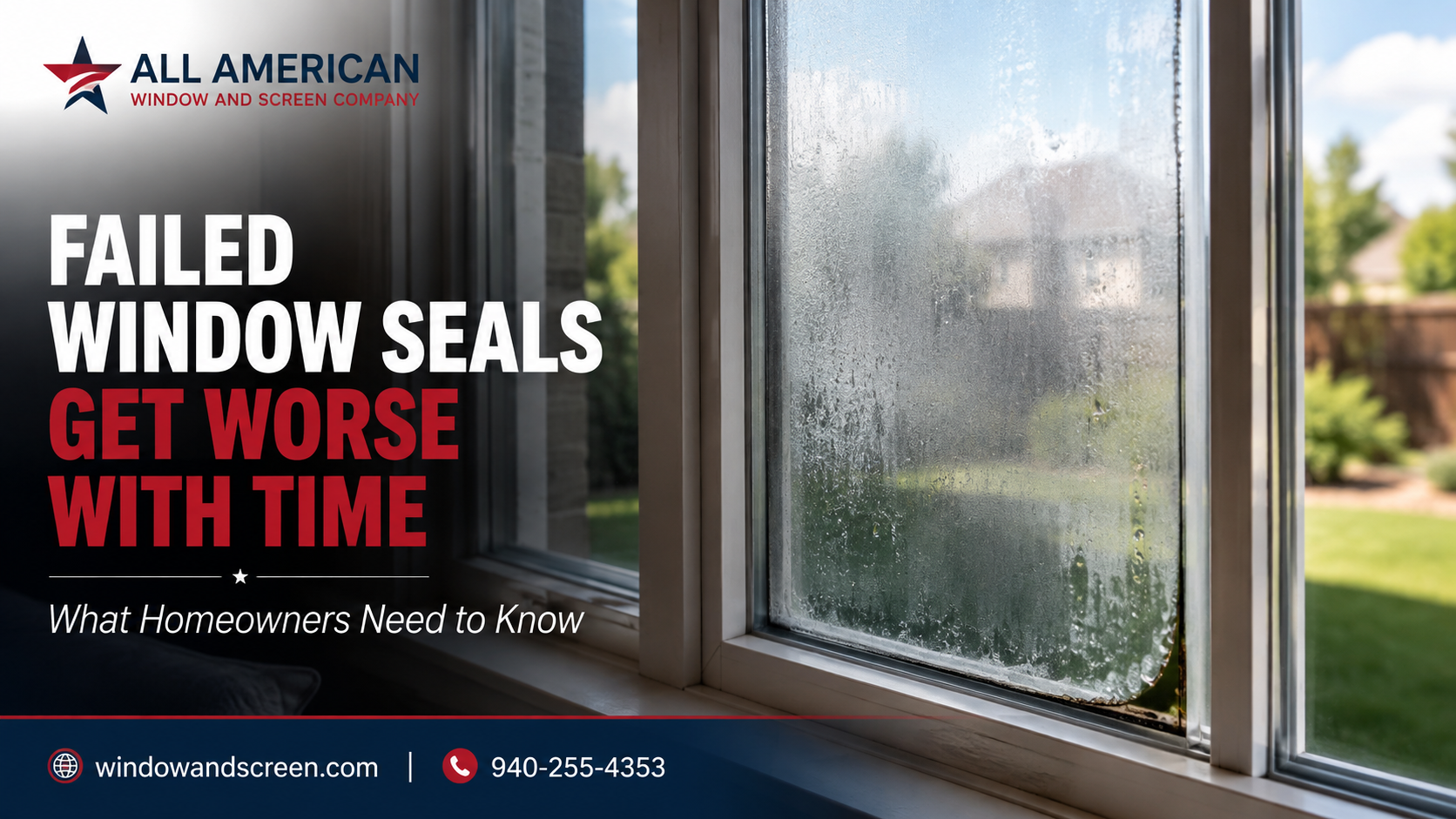
Foggy or cloudy glass is more than a cosmetic problem. When condensation appears between the panes of a double-pane window, it usually means the seal around the insulated glass unit has failed.
Once that seal fails, the window can no longer perform exactly as it was designed. The problem typically gets worse over time, and it cannot be corrected by cleaning either side of the window.
What Is a Failed Window Seal?
A double-pane insulated glass unit consists of two pieces of glass separated by a spacer and sealed around the perimeter. The sealed airspace helps reduce heat transfer through the glass.
When the perimeter seal breaks down, outside air and moisture can enter that space. Depending on the temperature and humidity, you may notice:
Condensation between the panes
A cloudy or hazy appearance
Water droplets inside the glass unit
Mineral deposits or streaking
Discoloration or oxidation of a Low-E coating
The fog may initially appear only during certain weather conditions. However, once moisture is entering between the panes, the seal has already failed.
The View Will Usually Get Worse
A failed seal may begin as a small amount of condensation in one corner. Over time, moisture can spread across more of the glass.
As the moisture repeatedly evaporates and condenses, it can leave behind mineral deposits and permanent staining. Eventually, the glass may remain cloudy even when no visible condensation is present.
Because the moisture is trapped inside the insulated glass unit, homeowners cannot clean it from either side.
The Window’s Energy Performance May Decline
A failed seal can reduce the insulating performance of the glass unit. If the window was manufactured with insulating gas between the panes, that gas may gradually escape and be replaced by ordinary air containing moisture.
The actual amount of energy loss will vary based on the glass, window construction, climate, size of the failure and how long the seal has been compromised. One failed unit may not cause a dramatic increase in an electric bill by itself, but multiple failed units can contribute to uncomfortable temperatures and additional heating or cooling demand.
Low-E Coatings Can Become Damaged
Some insulated windows contain a Low-E coating inside the sealed airspace. This coating is protected from exposure as long as the unit remains properly sealed.
When moisture and oxygen enter the airspace, certain Low-E coatings can begin to oxidize. This may create a cloudy, blotchy, rainbow-like or metallic appearance.
Once a Low-E coating has oxidized, it cannot be restored through cleaning. The affected insulated glass unit must be replaced.
Rooms May Become Less Comfortable
A failed insulated glass unit may allow more heat to move through the window than intended. Depending on the season and the window’s exposure, homeowners may notice:
Warmer areas near the glass during the summer
Colder glass surfaces during the winter
More noticeable temperature differences throughout the room
Increased demand on the heating or air-conditioning system
The change may be subtle with one window, but it can become much more noticeable when several windows have failed.
Delaying Replacement Can Affect Your Home’s Appearance and Value
Foggy windows are highly visible from both inside and outside the home. They can make otherwise well-maintained windows look dirty, damaged or neglected.
This becomes especially important when selling a home. Buyers and home inspectors frequently notice condensation between window panes. What appears to be a small cosmetic issue can become a repair request, negotiation point or concern about the condition of the remaining windows.
Addressing failed glass before listing the property allows the homeowner to control the repair instead of negotiating under pressure.
A Failed Seal Does Not Automatically Mean You Need New Windows
This is where homeowners are often sold more than they need.
If the window frames are still in good condition, operate properly and are not leaking water into the home, the insulated glass unit can often be replaced without replacing the entire window.
Glass replacement allows the existing frame to remain in place while the failed double-pane glass is removed and replaced with a new sealed unit. This is frequently less disruptive and less expensive than a complete window replacement.
A full window replacement may make more sense when the frames are rotted, warped, damaged, poorly installed or no longer operating correctly. The condition of the entire window should be evaluated before making that decision.
Can a Failed Window Seal Be Repaired?
The original seal cannot simply be restored while leaving the existing glass unit intact. Services that drill holes or attempt to remove moisture may temporarily improve the appearance, but they do not recreate the original factory-sealed insulated glass unit.
The dependable solution is to replace the failed insulated glass unit.
Homeowners may choose replacement clear insulated glass or upgrade to an energy-efficient Low-E glass option. The best choice depends on the window’s location, sun exposure, desired appearance and energy-performance goals.
Do Not Ignore the Warning Signs
A failed window seal is not usually an emergency, and it does not automatically mean rainwater is leaking into your walls. However, it will not repair itself.
Waiting can lead to worsening condensation, permanent staining, damaged Low-E coatings, reduced performance and a more obvious problem when it is time to sell the home.
All American Window and Screen Company replaces failed insulated window glass while preserving the existing window frames whenever they are still in good condition. We can also discuss clear glass and energy-efficient Low-E options based on the needs of your home.
Call or text 940-255-4353 or visit windowandscreen.com to request an evaluation.
Serving Justin, Flower Mound, Argyle, Northlake, Bartonville, Lantana, Haslet, Keller, Roanoke, Trophy Club, Grapevine, Denton, Decatur, Rhome, Bridgeport and surrounding North Texas communities.