Oxidized Low-E Glass: Why Your Window Looks Cloudy and Why It Can't Be Cleaned
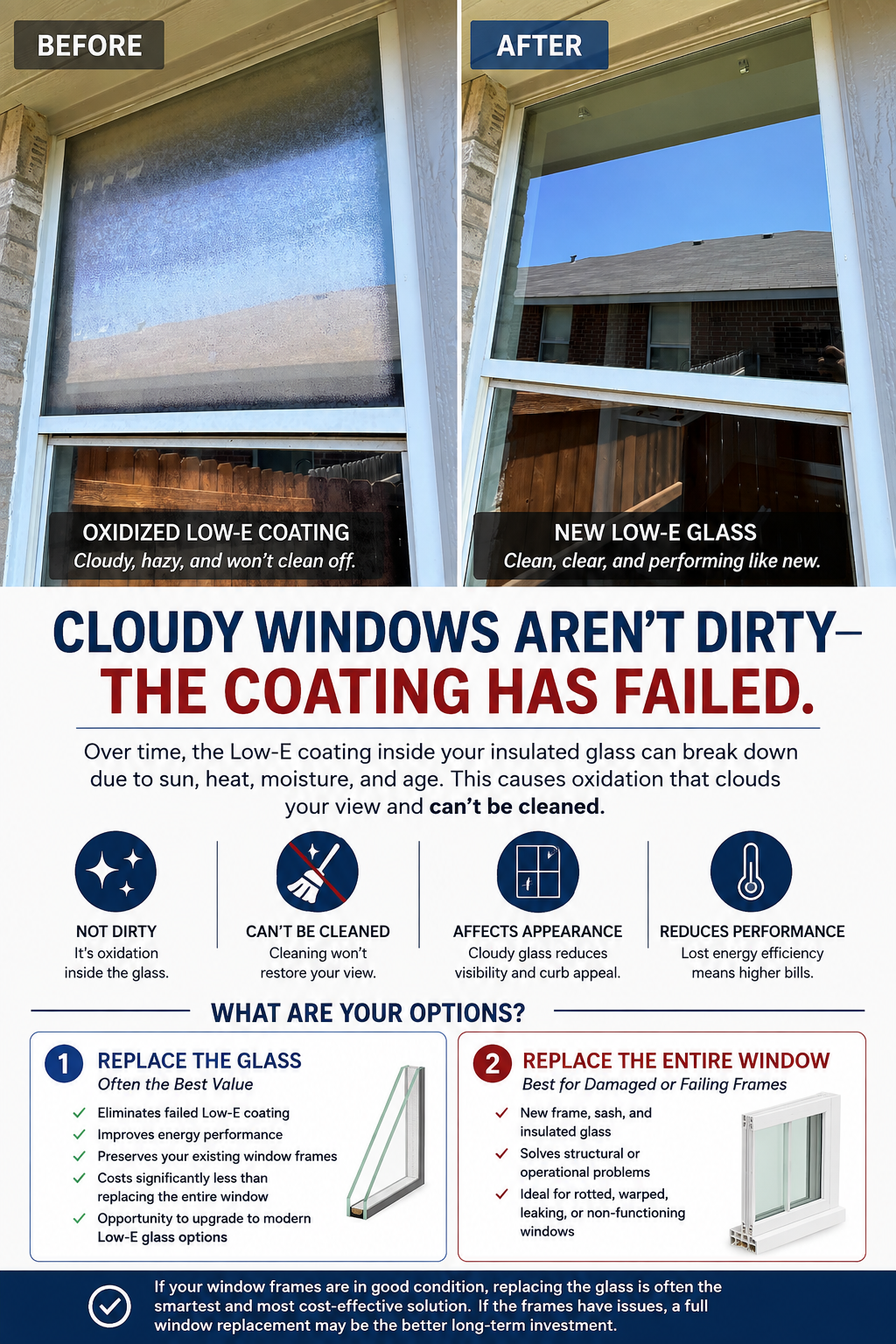
If you've cleaned your windows inside and out but still notice a cloudy, hazy, or speckled appearance, the problem may not be dirt at all.
In many cases, you're looking at oxidation of the Low-E coating inside the insulated glass unit. Unfortunately, this type of damage is permanent and cannot be cleaned away.
What Is Low-E Glass?
Low-E (Low Emissivity) glass is manufactured with a microscopically thin metallic coating that helps improve energy efficiency by reducing heat transfer and blocking a significant amount of harmful UV rays.
Most modern double-pane windows use Low-E glass because it helps keep homes more comfortable while reducing the workload on heating and cooling systems.
What Causes Low-E Oxidation?
Over time, exposure to heat, sunlight, moisture, and years of temperature changes can cause certain soft-coat Low-E coatings to deteriorate.
As the coating breaks down, it can develop a cloudy, blotchy, or speckled appearance that permanently affects the look of the glass. This deterioration occurs within the insulated glass unit and is not something on the surface that can simply be wiped away.
Although every window is different, oxidation is generally seen in older insulated glass units after many years of service.
Can It Be Cleaned?
No.
Because the damage is part of the glass assembly itself, window cleaners, razor blades, polishing compounds, or other cleaning methods will not remove it.
If your window still looks cloudy after cleaning both sides thoroughly, the insulated glass unit has likely reached the end of its service life.
What Are Your Options?
Replace the Glass (Often the Best Value)
If your window frames are still in good condition and operate properly, replacing only the insulated glass unit is often the most economical solution.
Benefits include:
Eliminates the oxidized or deteriorated Low-E coating
Restores the appearance of the window
Improves thermal performance with new insulated glass
Preserves your existing window frames
Typically costs significantly less than replacing the entire window
Provides the opportunity to upgrade to today's high-performance Low-E glass options
Replace the Entire Window
If the frame is damaged, rotted, warped, leaking, or no longer operates correctly, replacing the complete window may be the better long-term investment.
A full window replacement includes a new frame, sash, and insulated glass unit. While it is more expensive than replacing only the glass, it may be the right solution when the existing window has structural or operational issues.
Which Option Is Right for You?
The condition of the window frame is usually the deciding factor.
If the frame is structurally sound, replacing only the insulated glass can restore the window's appearance and improve its energy performance without the cost of a complete window replacement.
If the frame itself has reached the end of its life, replacing the entire window may provide the best long-term value.
An experienced glass professional can inspect your windows and recommend the solution that makes the most sense for your home.
Trust the Experts at All American Window and Screen Company
At All American Window and Screen Company, we specialize in replacing failed insulated glass, including oxidized Low-E glass, fogged windows, and broken double-pane glass.
Our goal is simple: recommend the solution that best fits your windows—not the most expensive one. If your frames are in good condition, replacing the glass may be all that's needed. If a complete window replacement is the better option, we'll explain why and help you make an informed decision.
We proudly serve homeowners throughout Justin, Northlake, Argyle, Flower Mound, Roanoke, Trophy Club, Keller, Haslet, Denton, Decatur, Rhome, Bridgeport, and surrounding North Texas communities.
Call or Text: 940-255-4353
Visit: windowandscreen.com
Whether your windows need new glass or complete replacement, we're here to help you choose the right solution for your home.