Does Low-E Glass Really Work—and Is It Worth the Cost?
If you have ever stood beside a sunny window and felt heat pouring through the glass, you already understand the problem Low-E glass is designed to address. But does Low-E glass actually make a measurable difference, or is it simply another expensive upgrade?
The short answer is yes—Low-E glass works. However, not every Low-E coating performs the same, and the most expensive or darkest option is not automatically right for every home.
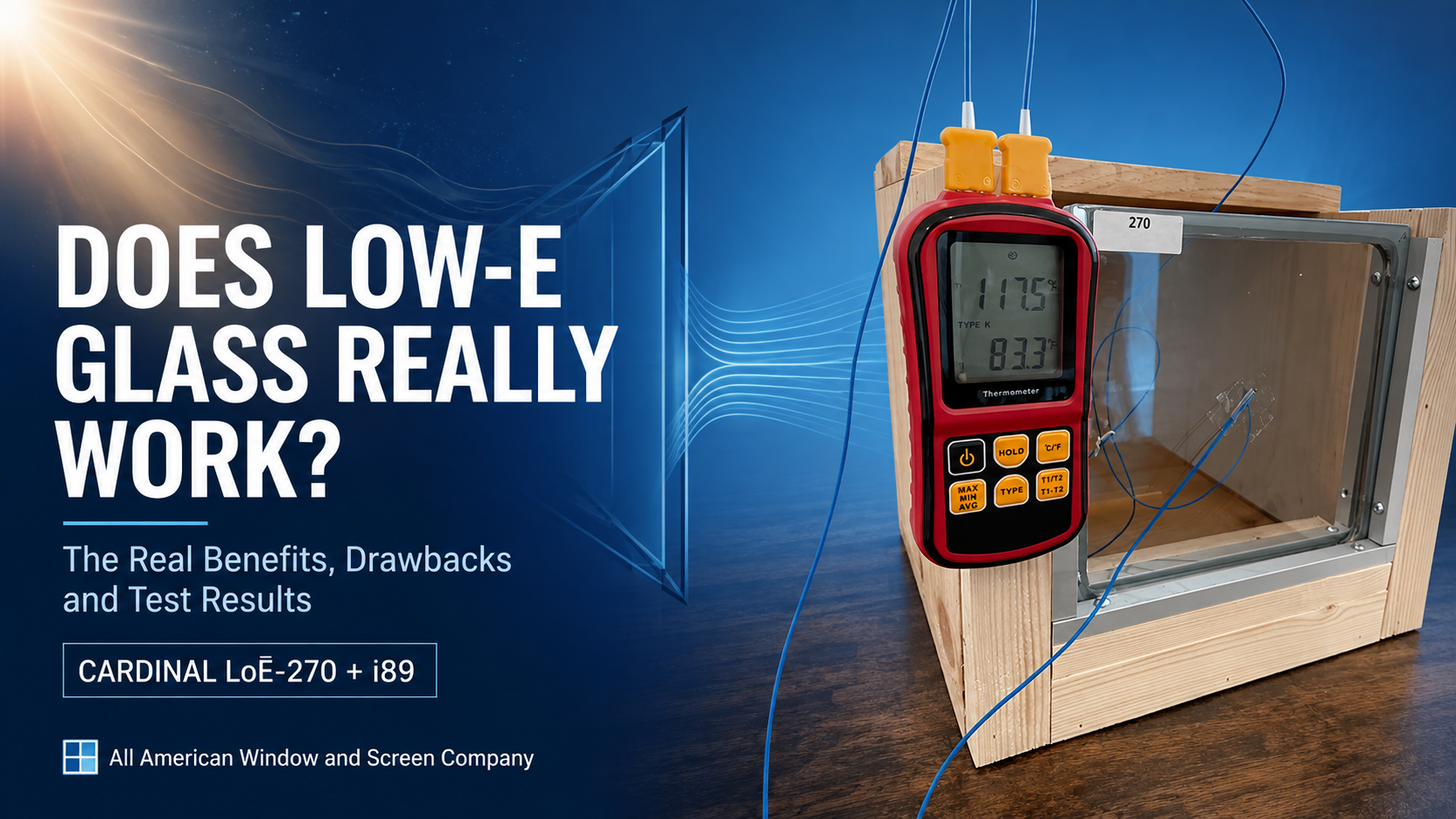
To see the difference ourselves, All American Window and Screen Company conducted a controlled demonstration comparing standard Clear over Clear insulated glass with two Cardinal Low-E glass configurations.
What Is Low-E Glass?
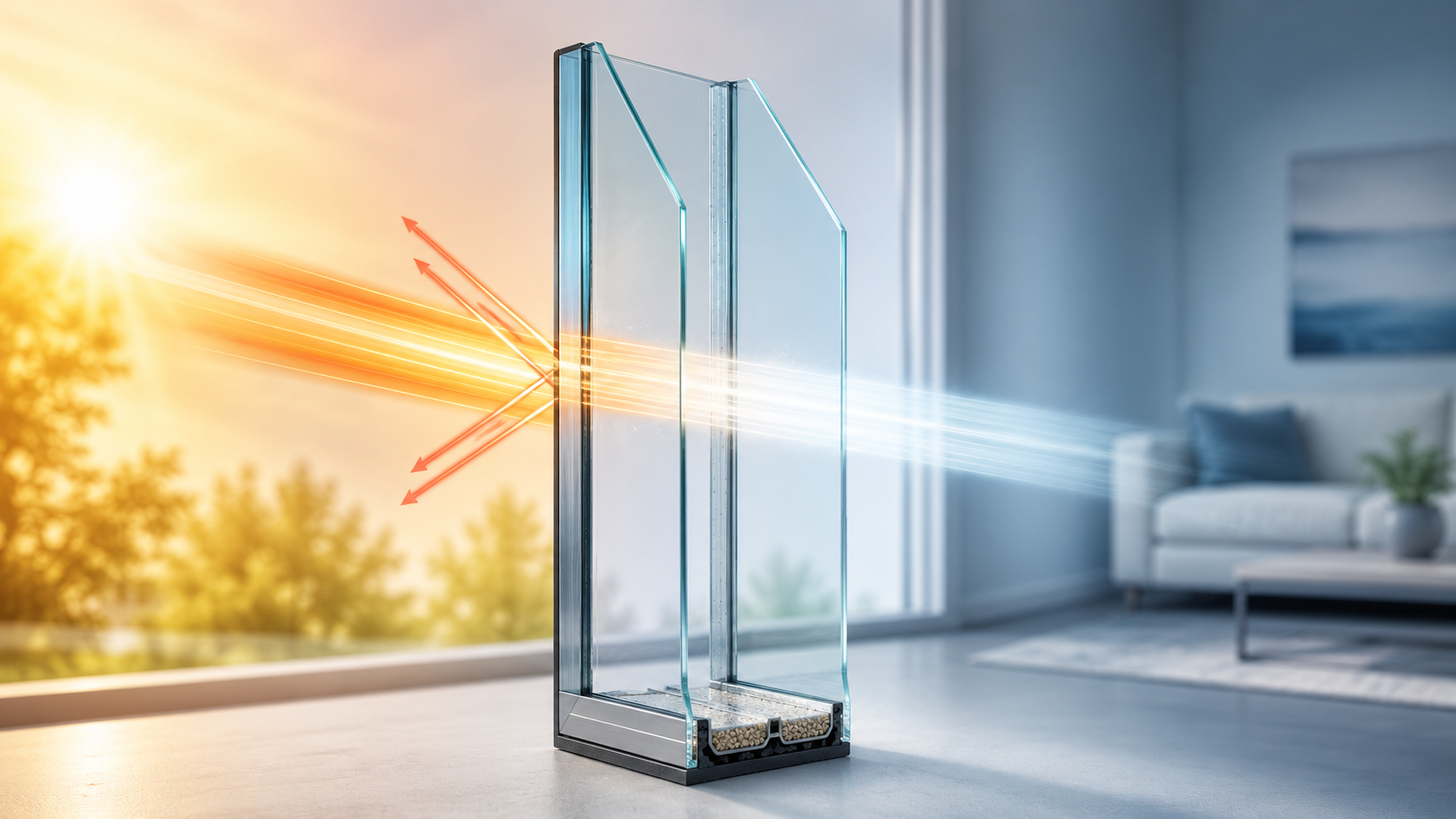
Low-E stands for “low emissivity.” Low-E glass has an extremely thin metallic coating that controls how radiant heat moves through the glass.
The coating is designed to reduce heat transfer while still allowing visible light through the window. In a hot climate such as North Texas, properly selected Low-E glass can reduce the amount of solar heat entering a home. During colder weather, it can also help reduce radiant heat loss through the glass.
According to the U.S. Department of Energy, Low-E coatings can lower a window’s U-factor and control solar heat gain and visible-light transmission.
Two important glass-performance measurements are:
U-factor: Measures the rate at which heat passes through the glass. A lower number indicates better insulating performance.
Solar Heat Gain Coefficient, or SHGC: Measures how much solar heat passes through the glass. A lower number means less solar heat enters the home.
In cooling-dominated climates, the Department of Energy recommends glass with a lower SHGC to reduce unwanted summer heat gain.
Our Clear Glass Versus Low-E Glass Demonstration
We exposed each insulated glass unit to the same general test conditions:
500-watt halogen lamp
Lamp positioned 16 inches from the glass
Five minutes of exposure
Surface temperatures measured on the exterior and interior panes
Here were the results:
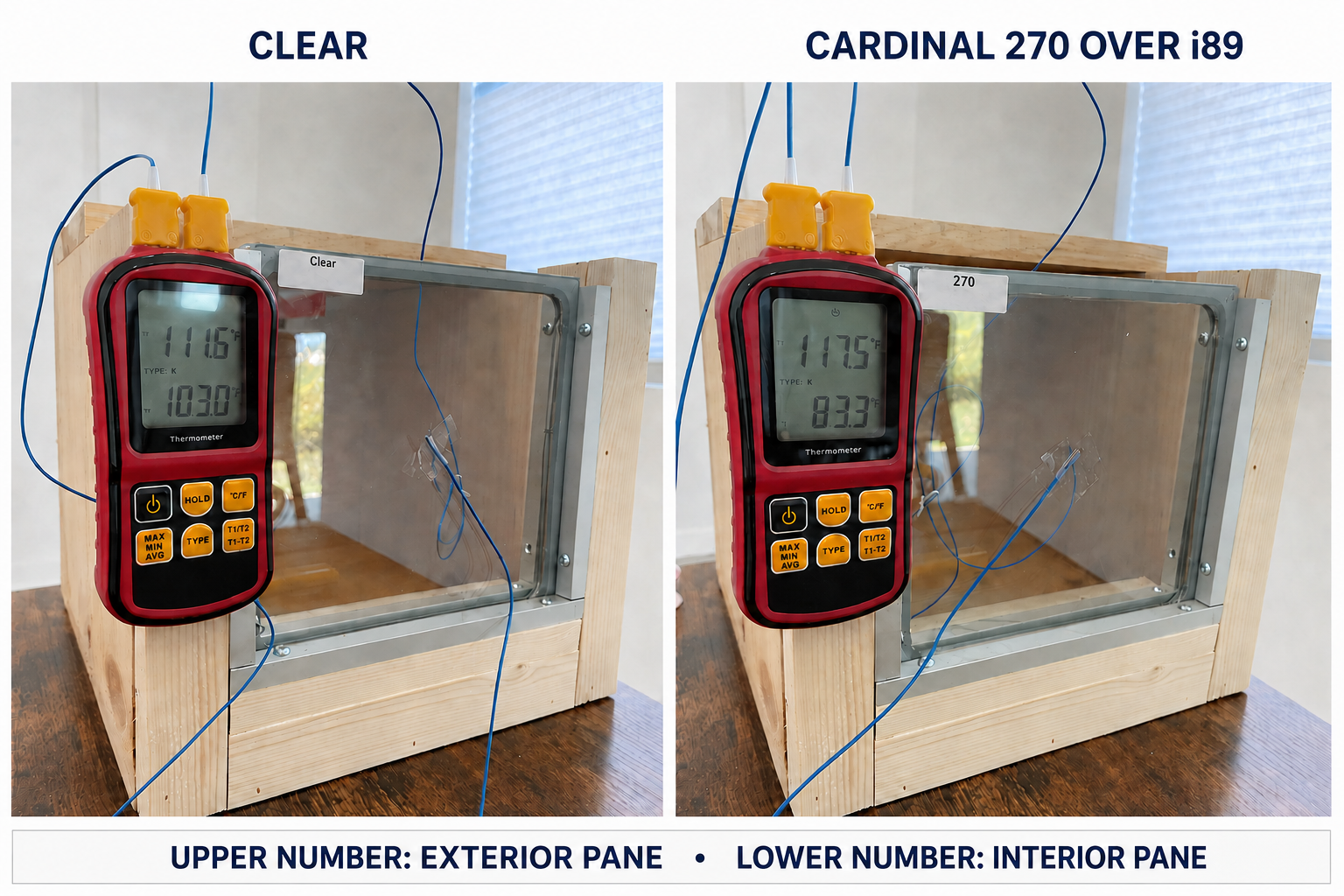
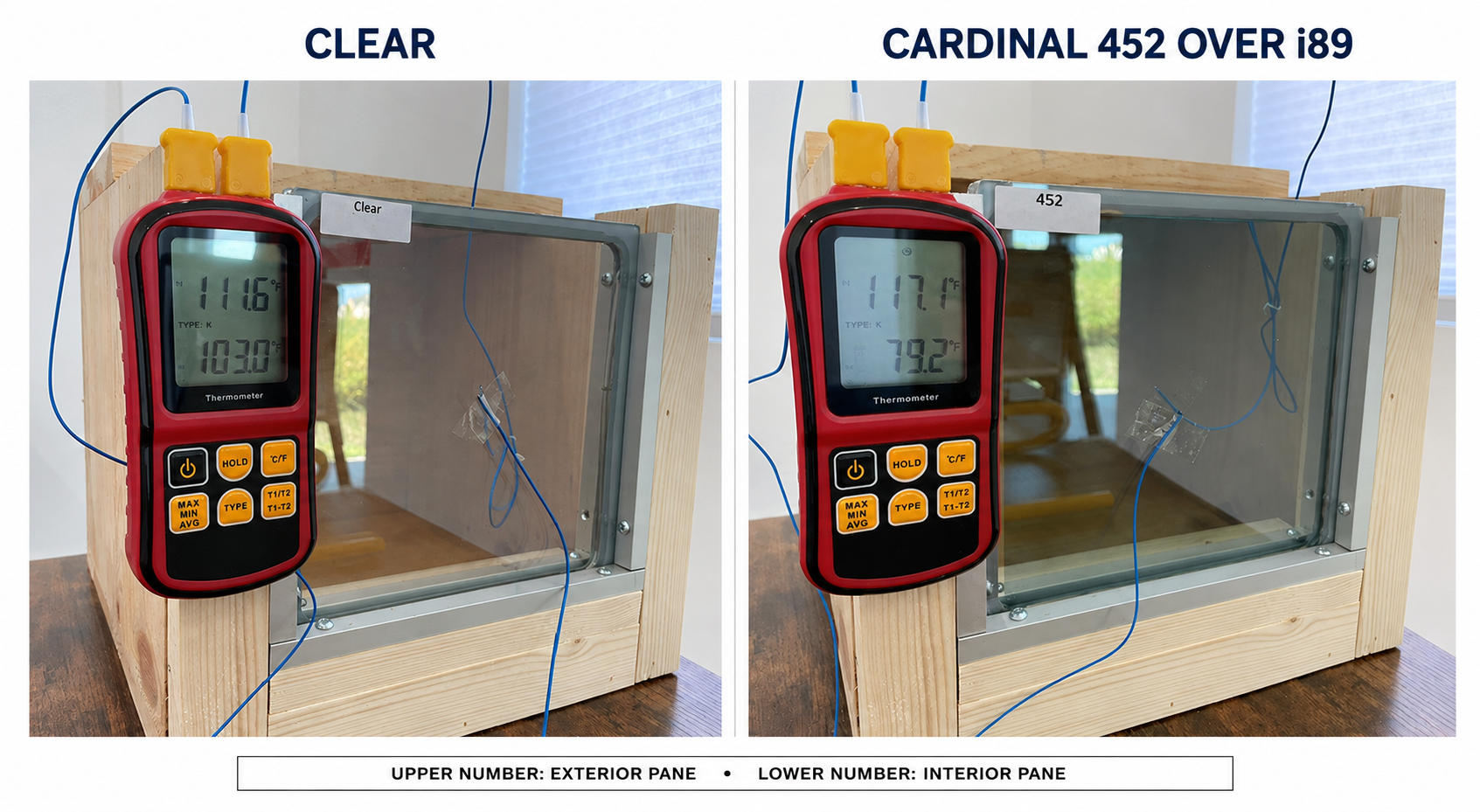
Clear over Clear glass
Exterior pane: 111.6°F
Interior pane: 103.0°F
Cardinal LoĒ-270 over i89
Exterior pane: 117.5°F
Interior pane: 83.3°F
Interior pane was 19.7°F cooler than Clear over Clear
Cardinal Quad LoĒ-452+ over i89
Exterior pane: 117.1°F
Interior pane: 79.2°F
Interior pane was 23.8°F cooler than Clear over Clear
The most important number is the temperature of the interior pane—the surface facing the inside of the home.
Although the exterior panes of the Cardinal units became hotter, considerably less heat reached the interior panes. A warmer exterior pane does not mean that the glass failed. In this demonstration, it was consistent with more of the lamp’s energy remaining on the exterior side instead of reaching the room-facing pane.
What Does the Test Actually Prove?
The test clearly demonstrates that the three glass configurations handled the lamp’s radiant energy differently. Under these controlled conditions, both Cardinal Low-E configurations kept their interior panes substantially cooler than Clear over Clear glass.
However, this was a practical demonstration—not a laboratory-certified NFRC test.
A halogen lamp does not perfectly reproduce the complete spectrum, angle or intensity of natural sunlight. Actual performance can also be affected by:
Outdoor temperature
Window direction and sun exposure
Shade from trees or roof overhangs
Glass size and airspace
Frame construction
Air leakage
Interior temperature and humidity
Installation quality
Condition of the home’s insulation and HVAC system
Therefore, this demonstration should not be used to promise an exact reduction in electric bills. It shows that Low-E glass can substantially reduce heat transfer through the glass under the tested conditions—not precisely how much money every homeowner will save.
The Pros of Low-E Glass
1. Reduced solar heat gain
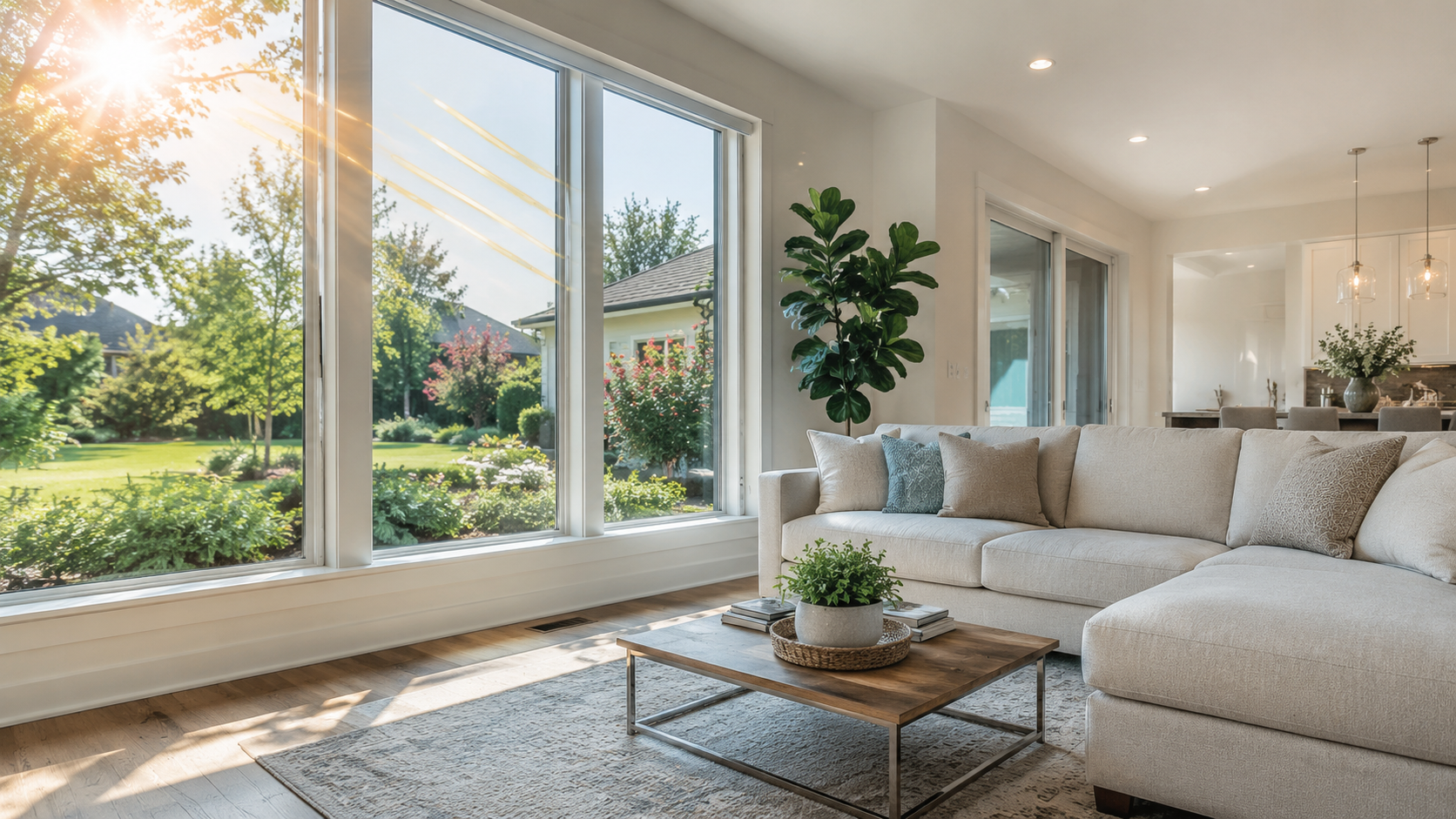
This is one of the most valuable benefits in North Texas. A lower-SHGC glass configuration allows less solar heat to enter the home.
Cardinal classifies LoĒ-270 as a medium-solar-gain coating and Quad LoĒ-452+ as a low-solar-gain coating. For a standard ¾-inch, two-pane insulating glass unit, Cardinal reports an SHGC of approximately 0.37 for LoĒ-270 and 0.22 for Quad LoĒ-452+. Adding i89 can slightly reduce the SHGC further. Cardinal Glass performance information
The lower SHGC of the 452 configuration makes it especially useful for windows receiving intense Texas sun.
2. Cooler interior glass surfaces
Our demonstration showed interior-pane differences of 19.7°F with Cardinal LoĒ-270 over i89 and 23.8°F with Cardinal Quad LoĒ-452+ over i89.
Cooler room-side glass may reduce the uncomfortable radiant heat people feel while sitting or standing near sun-exposed windows.
3. Improved comfort in hot rooms
Low-E glass can help reduce hot spots in rooms with large windows or strong afternoon exposure. West-facing windows are often especially troublesome because they receive intense late-day sunlight when outdoor temperatures are already high.
Low-E glass will not correct every comfort problem, but it can address heat entering directly through the glass.
4. Reduced cooling demand
By reducing unwanted heat gain, Low-E glass can reduce part of the cooling load placed on the air-conditioning system.
That does not mean every homeowner will receive the same electric-bill savings. Savings depend on the amount of glass, window direction, climate, thermostat settings, HVAC efficiency, insulation and many other factors.
5. Better cold-weather performance
Low-E coatings also help slow radiant heat loss through the glass during colder weather. A lower U-factor means less heat flows through the glazing system.
The i89 room-side coating is specifically designed to improve thermal performance and help maintain a warmer interior glass surface during heating conditions. Cardinal states that this can also help reduce the occurrence of interior condensation. Cardinal LoĒ-i89 information
6. Better protection against fading
Low-E glass can reduce ultraviolet transmission and other portions of solar energy associated with fading.
This may help protect:
Flooring
Furniture
Curtains
Artwork
Photographs
Interior finishes
No residential glass completely eliminates fading, but selecting glass with lower fade transmission can slow the process.
7. Natural light without accepting as much heat
Low-E coatings are designed to reduce heat transfer while preserving useful daylight. This can provide an advantage over dark shades or other solutions that reduce heat only by blocking the view and natural light.
However, different Low-E coatings transmit different amounts of visible light. That tradeoff must be considered when selecting the glass.
8. The entire window may not need replacement
If the existing frames, sashes and operating components remain in good condition, it may be possible to replace only the insulated glass unit.
This can allow a homeowner to upgrade from clear glass to Low-E glass without removing the complete window frame. It can be especially practical when an existing insulated-glass seal has already failed and the glass needs replacement anyway.
The Cons of Low-E Glass
1. Higher initial cost
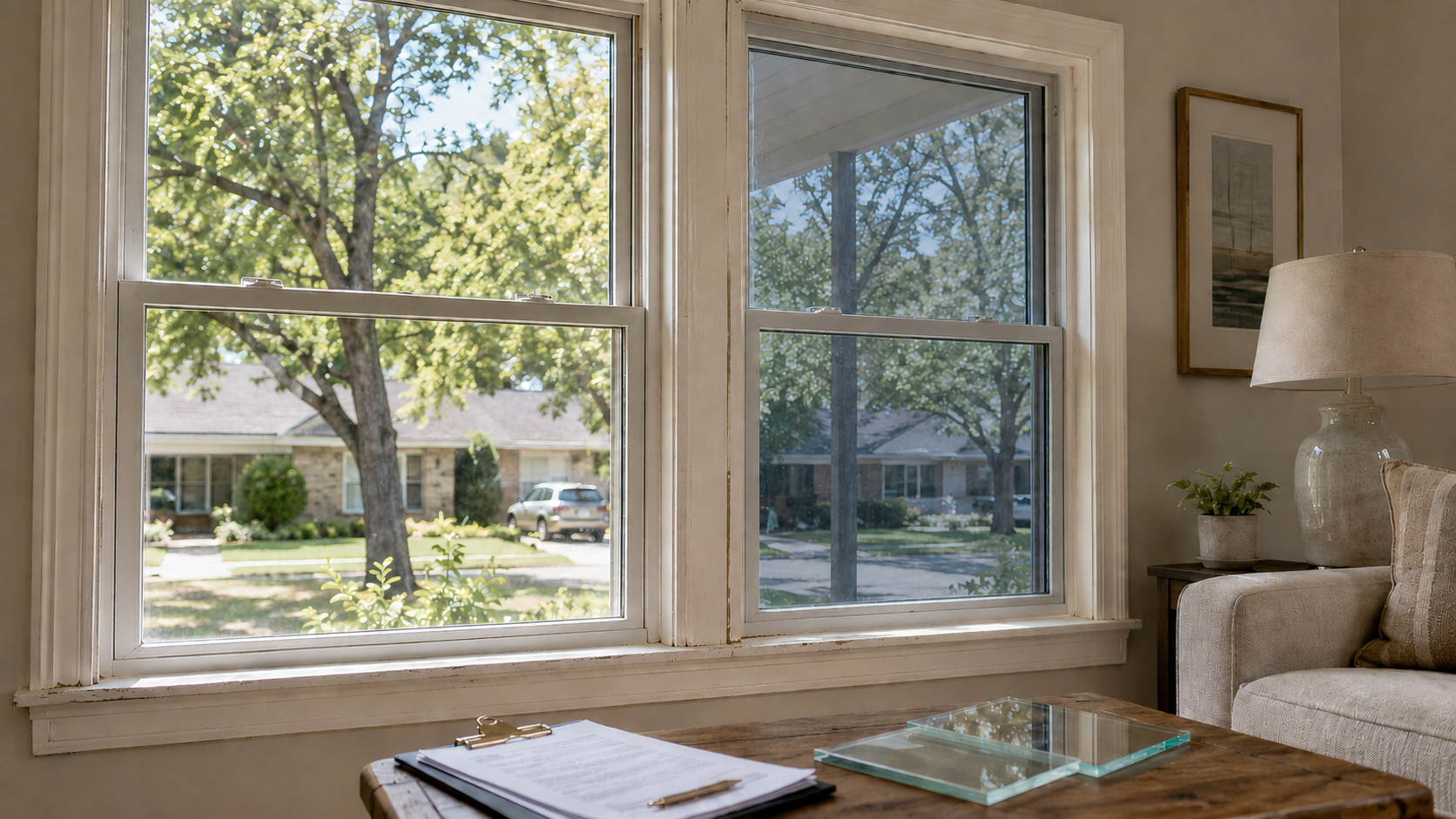
Low-E insulated glass costs more than basic Clear over Clear glass. The exact difference depends on the coating, glass size, tempering requirements, shape and configuration.
The upgrade is easier to justify when the existing glass is already broken, foggy or experiencing seal failure. Replacing perfectly functional glass solely to reduce energy use requires a more careful cost-versus-benefit calculation.
2. It will not solve every energy-efficiency problem
Low-E glass addresses heat transfer through the glass, but it cannot repair:
Air leaking around the window
Damaged weatherstripping
Poorly insulated frames
Gaps around the window opening
Inadequate attic or wall insulation
An inefficient or improperly sized HVAC system
Ductwork leaks
Installing high-performance glass in a severely deteriorated or air-leaking window frame may produce disappointing results.
3. More heat control can mean less visible light
Stronger solar-control coatings generally allow less visible light through the glass.
Cardinal reports approximately 70% visible-light transmission for LoĒ-270 and approximately 52% for Quad LoĒ-452+ in the listed ¾-inch, two-pane configurations. The final appearance can vary based on glass thickness, coating placement, added i89, surroundings and lighting conditions.
Cardinal’s Low-E color simulator also shows that different coatings can change the interior and exterior appearance of the glass.
Homeowners who want maximum natural light may prefer LoĒ-270. Homeowners who prioritize stronger solar control may prefer Quad LoĒ-452+.
4. Glass color and reflectivity may be noticeable
Some Low-E products have a slight tint or increased reflectivity. The difference may be subtle from inside but more noticeable from the exterior, particularly when Low-E glass is installed next to older clear glass.
Replacing only one or two units on a highly visible elevation may create an appearance mismatch. The new glass should be compared with the surrounding windows before ordering.
5. The strongest solar-control glass is not right everywhere
A very low SHGC is useful in hot climates and on heavily sun-exposed windows, but it also reduces beneficial winter solar gain.
A north-facing window protected by shade may not require the same solar-control coating as a large west-facing window receiving intense afternoon sun. Using the same glass everywhere without considering orientation can be a lazy—and sometimes wasteful—approach.
6. Glass-only replacement does not improve the frame
Replacing the insulated glass can improve the performance of the glass area, but it does not change the efficiency of the existing frame.
Published center-of-glass performance numbers should not be confused with the certified performance of an entire window. The frame, sash, spacer, size and hardware all influence whole-window performance.
7. Low-E glass is not damage-proof
Low-E coatings improve thermal performance, but they do not make the glass unbreakable. The insulated unit can still be damaged by impact, improper installation, building movement or eventual seal failure.
Cardinal LoĒ-270 Over i89 or Quad LoĒ-452+ Over i89?
Neither product is automatically best for every homeowner.
Cardinal LoĒ-270 over i89 may be a better choice when:
You want improved efficiency without substantially darkening the view
Natural light is a major priority
The windows receive moderate sun exposure
You want balanced year-round performance
You prefer a more neutral appearance
Cardinal Quad LoĒ-452+ over i89 may be a better choice when:
Reducing Texas solar heat is the main priority
The windows face west or receive intense afternoon sun
The room has large areas of glass
The room consistently becomes hotter than the rest of the home
Additional UV and fade protection is important
You are comfortable with somewhat lower visible-light transmission
Is Low-E Glass Worth It?
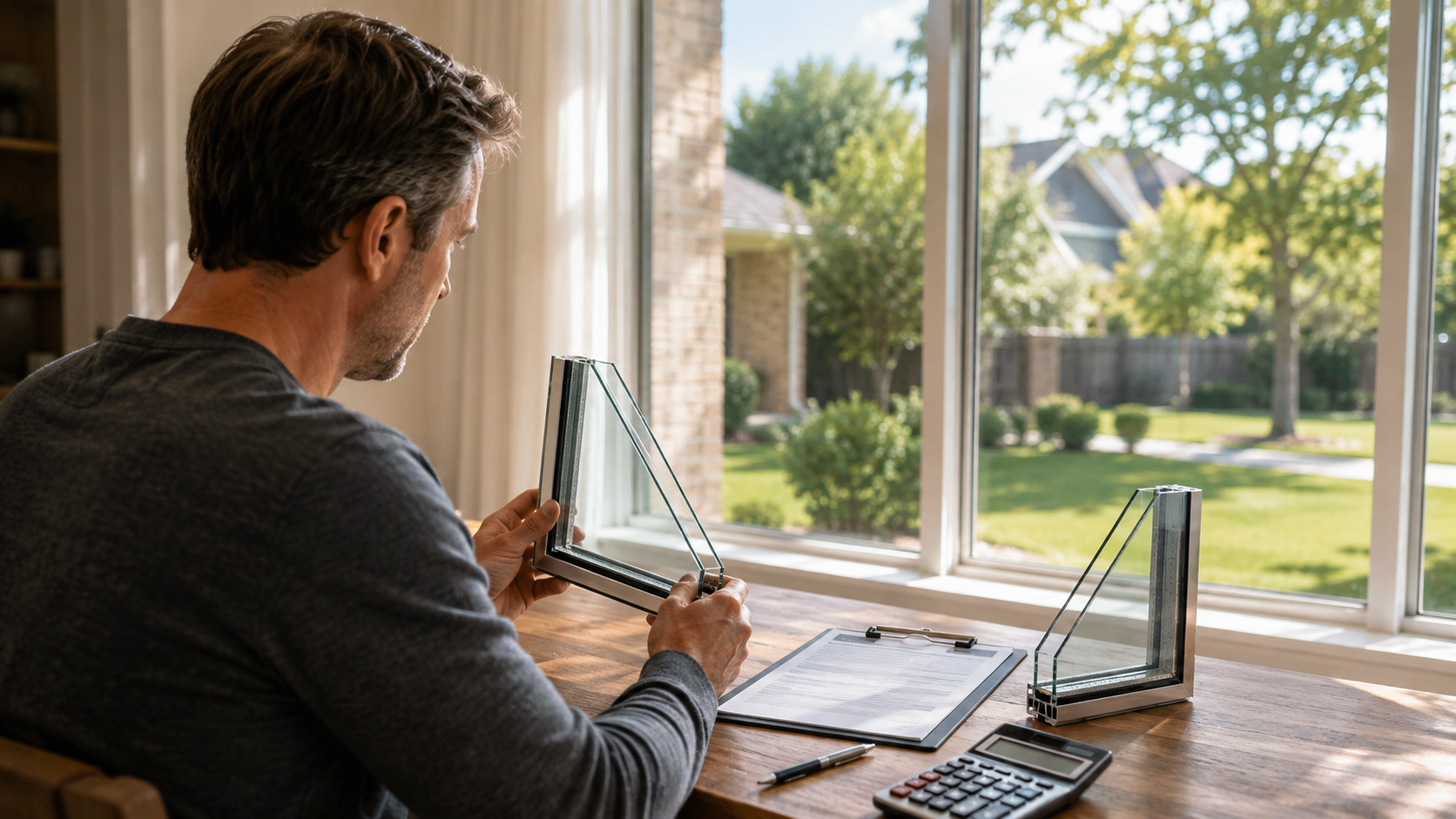
Low-E glass is usually worth considering when:
Existing insulated glass is foggy, broken or experiencing seal failure
The room becomes noticeably hotter because of sun exposure
Furniture or flooring is fading near the windows
You feel radiant heat while sitting near the glass
The frames remain in good condition
You plan to stay in the home long enough to benefit from improved comfort and possible energy savings
It may not be the best investment when:
The frames are badly damaged or leaking air
The installation around the window has failed
The windows receive very little direct sunlight
The home has larger insulation or HVAC problems that should be corrected first
The glass is still functional and the replacement cost cannot reasonably be recovered through comfort, protection or energy benefits
The Bottom Line
For most North Texas homeowners, Low-E glass is worth the additional cost—especially when the existing insulated glass is already broken, foggy or experiencing seal failure and needs to be replaced anyway. In that situation, the homeowner is already paying for new glass, so the decision is whether to reinstall basic clear glass or spend somewhat more for better heat control, improved comfort and additional protection against fading.
The upgrade can also make sense for west- and south-facing windows, rooms that become noticeably hotter during the afternoon, large areas of glass, or windows near furniture and flooring that receive substantial sunlight.
Replacing perfectly functional clear glass throughout an entire home is a more complicated decision. Low-E glass may improve comfort and reduce part of the home’s cooling load, but the energy savings alone may take years to recover the replacement cost. It also cannot correct air leaks, damaged frames, poor insulation or an inefficient HVAC system.
Low-E glass is not a gimmick. The technology is well established, and both Department of Energy guidance and published manufacturer performance data show that Low-E coatings can reduce heat transfer and solar heat gain.
Our demonstration produced a clear difference: compared with the 103.0°F interior pane of the Clear over Clear unit, Cardinal LoĒ-270 over i89 measured 83.3°F and Cardinal Quad LoĒ-452+ over i89 measured 79.2°F after the same five-minute exposure.
That does not guarantee a specific reduction in anyone’s electric bill, but it provides a convincing demonstration that glass selection matters.
If your existing window frames are still in good condition, upgrading the insulated glass may be a practical alternative to replacing the entire window.
Call or text All American Window and Screen Company at 940-255-4353 for a free estimate.
Visit windowandscreen.com.
Serving Justin, Northlake, Argyle, Flower Mound, Bartonville, Lantana, Haslet, Keller, Roanoke, Trophy Club, Grapevine, Lewisville, Denton, Decatur, Rhome, Bridgeport and Northwest Fort Worth.
Test results were obtained from a controlled demonstration using a 500-watt halogen lamp positioned 16 inches from the glass for five minutes. Results can vary based on environmental conditions, glass configuration, window construction and installation.