What Is Low-E Glass, and Do You Really Need It for Your Home?
If you've been researching replacement windows or replacing foggy glass, you've probably come across the term Low-E glass.
You may be wondering:
"What is Low-E glass, and is it really worth it?"
The short answer is yes. For most homeowners, Low-E glass is one of the best upgrades you can make to improve comfort, lower energy costs, and protect your home's interior.
Let's take a closer look at what it is and why it matters.
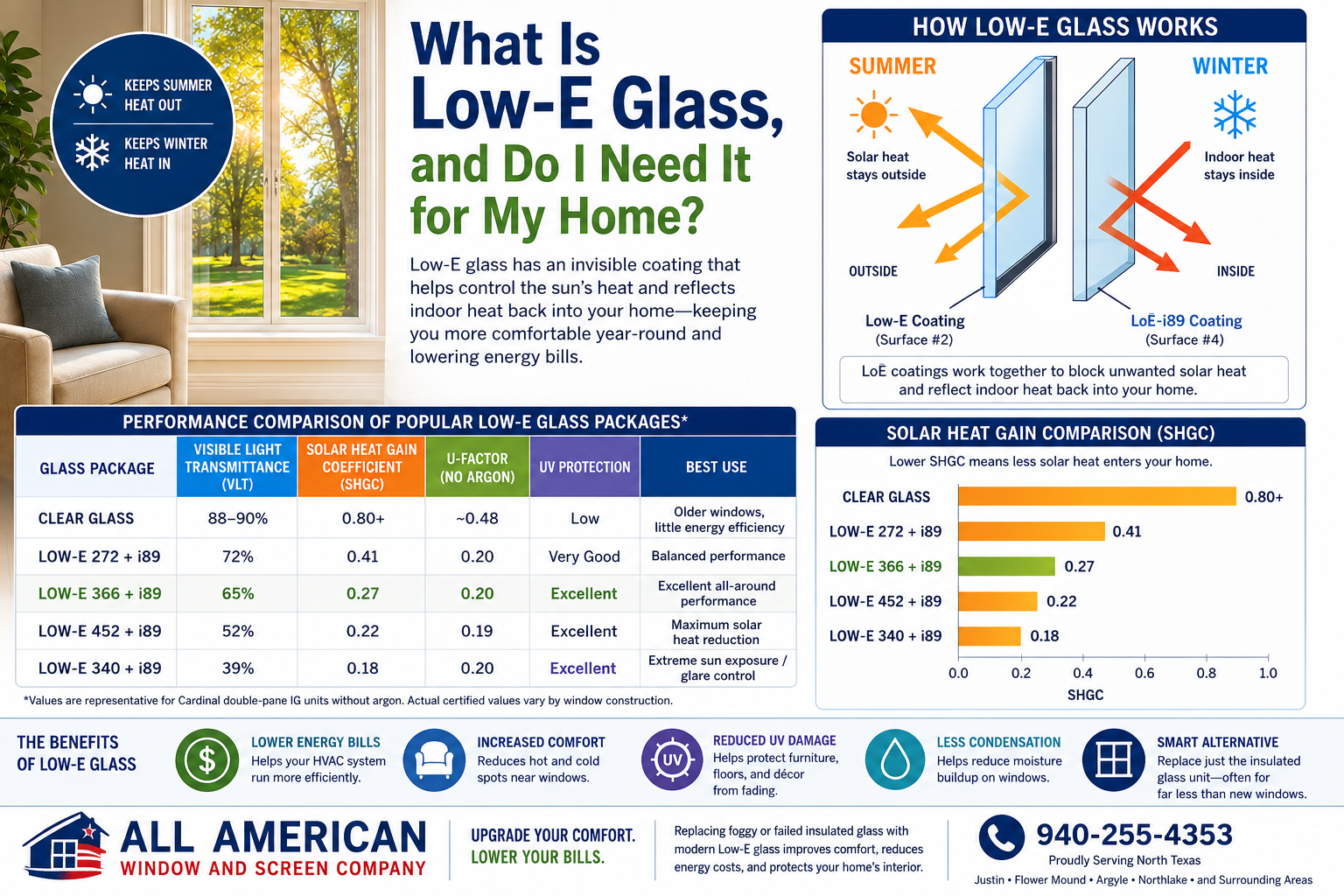
What Is Low-E Glass?
Low-E stands for Low Emissivity.
That may sound technical, but the concept is actually very simple.
Low-E glass has an extremely thin, transparent metallic coating that helps control the movement of heat through the glass.
Think of it as sunscreen for your windows.
It allows plenty of natural daylight into your home while helping keep unwanted heat outside during the summer and reducing heat transfer year-round.
Unlike tinted glass, modern Low-E coatings remain nearly invisible while dramatically improving the performance of your windows.
How Does Low-E Glass Work?
Heat from the sun reaches your home as infrared radiation.
Standard clear glass allows much of that heat to pass directly into your home.
Low-E coatings reflect much of that radiant heat before it enters your living space.
During the Summer
The coating reflects much of the sun's heat away from your home.
Benefits include:
Cooler rooms
Reduced hot spots near windows
Less work for your air conditioner
Lower cooling costs
During Cooler Weather
Low-E coatings also help reduce heat transfer through the glass, improving comfort and helping maintain more consistent indoor temperatures.
What Is LoĒ-i89®?
Many homeowners notice glass packages labeled:
Low-E 272 + i89
Low-E 366 + i89
Low-E 452 + i89
The i89 coating works alongside the primary Low-E coating.
While the primary Low-E coating is designed to reduce the sun's heat entering your home, LoĒ-i89 helps reflect your home's conditioned air back into the room, improving the insulating performance of the insulated glass unit.
Together they provide year-round comfort and greater energy efficiency.
Does Low-E Glass Block Sunlight?
No.
This is one of the biggest misconceptions.
Low-E coatings are designed to reduce heat, not daylight.
Your home still feels bright and open while allowing much less unwanted solar heat to enter.
Benefits of Low-E Glass
Lower Energy Bills
Reducing heat transfer means your heating and cooling system doesn't have to work as hard.
Improved Comfort
Rooms stay more comfortable throughout the day with fewer hot or cold spots near windows.
Reduced UV Damage
Low-E glass helps block much of the ultraviolet light that causes:
Hardwood floors to fade
Furniture discoloration
Carpet fading
Curtain damage
Artwork deterioration
Less Interior Condensation
Modern insulated Low-E glass can also reduce moisture buildup on interior glass surfaces during certain weather conditions.
Which Low-E Glass Is Right for Your Home?
Low-E 272 + i89
A balanced option that provides:
Plenty of natural daylight
Good heat reduction
Excellent everyday performance
Ideal for homeowners who want a bright home while improving energy efficiency.
Low-E 366 + i89
This is our most recommended glass package for North Texas homeowners.
It provides:
Excellent natural light
Outstanding solar heat control
Strong UV protection
Excellent year-round comfort
For most homes, Low-E 366 offers the best balance of performance and appearance.
Low-E 452 + i89
Perfect for homes with:
Large west-facing windows
Significant afternoon sun
High cooling costs
It blocks even more solar heat than Low-E 366 while still allowing comfortable natural light into the home.
Low-E 340 + i89
Designed for situations where maximum solar control is desired.
Best suited for:
Homes with extensive glass
Rooms with severe glare
Areas receiving intense direct sunlight
It offers exceptional heat rejection while noticeably reducing brightness.
Do You Need New Windows?
Not necessarily.
If your window frames are still in good condition but your insulated glass has become:
Foggy
Broken
Cracked
Failed
you may only need to replace the insulated glass instead of the entire window.
This can provide modern Low-E performance while saving thousands of dollars compared to full window replacement.
Which Glass Do We Recommend?
Your SituationRecommended GlassMost North Texas homes⭐ Low-E 366 + i89Large west-facing windows⭐ Low-E 452 + i89Heavy afternoon sun⭐ Low-E 452 + i89Maximum daylight⭐ Low-E 272 + i89Maximum glare reduction⭐ Low-E 340 + i89
The Bottom Line
Low-E glass is one of the smartest upgrades you can make for your home.
It helps reduce unwanted solar heat, improves indoor comfort, protects your furniture and flooring from UV damage, and can lower heating and cooling costs.
If your insulated glass has become foggy or broken, replacing just the glass with a modern Low-E insulated glass unit can often provide the performance of today's energy-efficient windows without the expense of replacing the entire window.
At All American Window and Screen Company, we help homeowners throughout North Texas choose the right Low-E glass package for their home and budget. Whether you're replacing foggy glass, repairing broken double-pane windows, or upgrading older glass for better comfort and efficiency, we're here to help you make an informed decision.
If you'd like to learn which Low-E glass is best for your home, contact us today for a free consultation
Call or text 940-255-4353